The therapies
One or several approaches, chosen for you: the therapy adapts to the person.
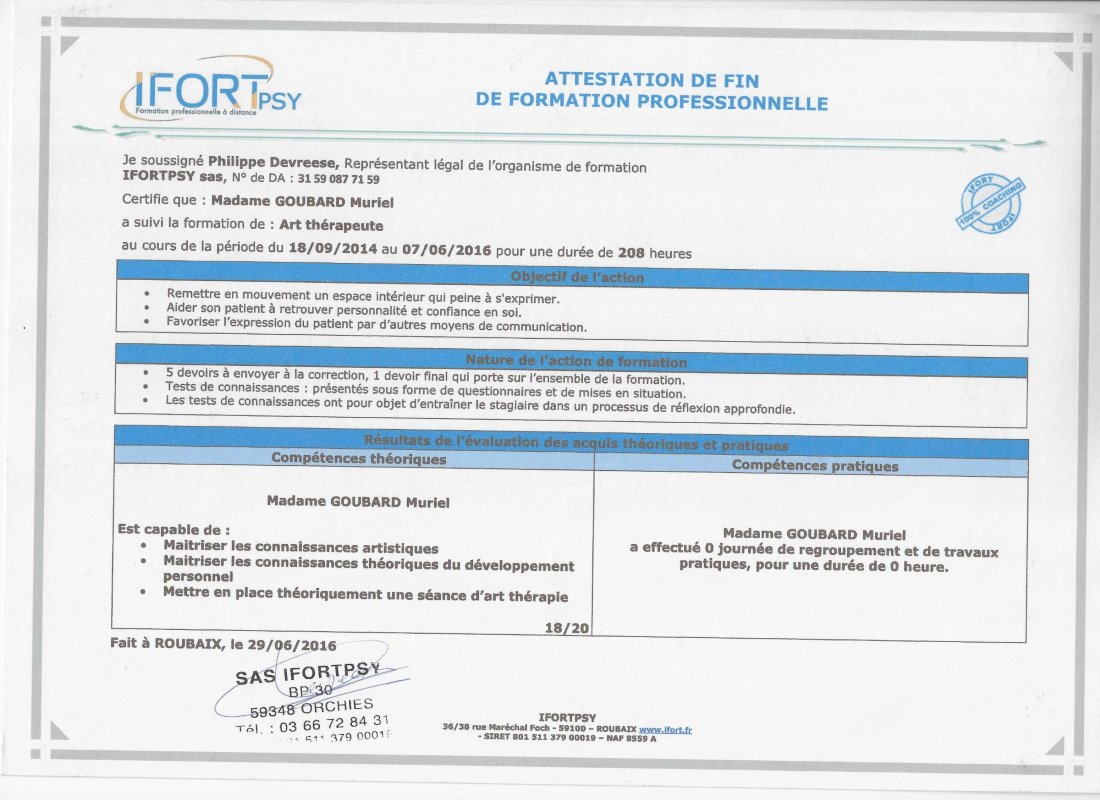
Art therapy
Art therapy means creating favourable conditions for personal growth, by stimulating your creative abilities.
Art therapy was born from art, combined with psychological, medical and psychiatric studies.
From the end of the 19th century, artists and doctors took an interest in the creations (drawings or paintings) of patients in psychiatric asylums. The surrealist movement saw these works as “art brut”, belonging to no artistic movement and following no rule of art. These creations simply express the feelings and emotions of their author; the therapist draws out their symbolism and metaphor.
Through its methods and structure, art therapy leads a person towards well-being.
“In art therapy, we feel protected, whereas with art we feel exposed.”
Important: art therapy does not give a medical diagnosis, nor does it treat any disease. An art therapist therefore never prescribes medication. It may only be practised by a person trained in art therapy.
Sessions take place remotely: you create at home, with simple materials, and I am there to guide and advise you throughout the session.
The different mediums
Painting
An expressive world not reserved for children, but a wonderful testimony of freedom. Your finger, some paint, and off you go! Putting your emotions on paper helps you listen to yourself and put your thoughts in order.
Collage
We draw, as emotions come, from everyday reality. We take apart and rebuild the fabric of reality, transforming it. Collage speaks and reveals the many corners of a personality.
Writing
Guided or free, writing helps channel old or present emotions. It sometimes surprises you by the strength of what it captures. It is a very good medium to start with.
Dance and body expression
The body records sensations that escape our consciousness. Its expressiveness reveals the secrets of the past. In guided sessions, I suggest movements adapted to expressing your emotions.
Music
Music can carry every emotion, create countless feelings of connection and channel our energies. This medium is open to everyone!
Pottery
Simply touching and feeling can help you refocus and reconnect with your body and its movements. All the senses come alive.
Theatre and clowning
To step out of withdrawal and reveal your true self, the one we try to hide behind humour and make-up.
Masks and puppets
To bring out the successive characters that make us up, and understand our role and our true place: “who I am”, “what I can do”, “who I can be”.
Photo and video
Working on conscious and unconscious zooms to lay bare your own perception of yourself and of the world.
Ericksonian hypnosis
Hypnosis is what therapists call an altered state of consciousness. In everyday life, we are in an ordinary state of consciousness.
When you are daydreaming, or absorbed in a book or a film, you are already in a light trance. On a long drive, you may have said to yourself: “Already here? I didn’t see the time go by.” The hypnotherapist amplifies this natural ability we all have.
Ericksonian hypnosis is a gentle hypnosis that respects the person’s environment. Suggestions are almost always indirect, unlike so-called “classical” hypnosis, which is directive.
In which situations?
Self-esteem, self-confidence, shyness, stress, relationship and emotional difficulties, grief, forgiveness, mental preparation, exams, sports performance, a new direction in life, emotional blocks, letting go, personal development, learning self-hypnosis for more independence…
Want to quit smoking, sleep better or change your relationship with food? Hypnosis can support you through these changes, at your own pace. It does not replace medical follow-up: if your sleep or your weight is linked to a health problem, talk to your doctor as well.
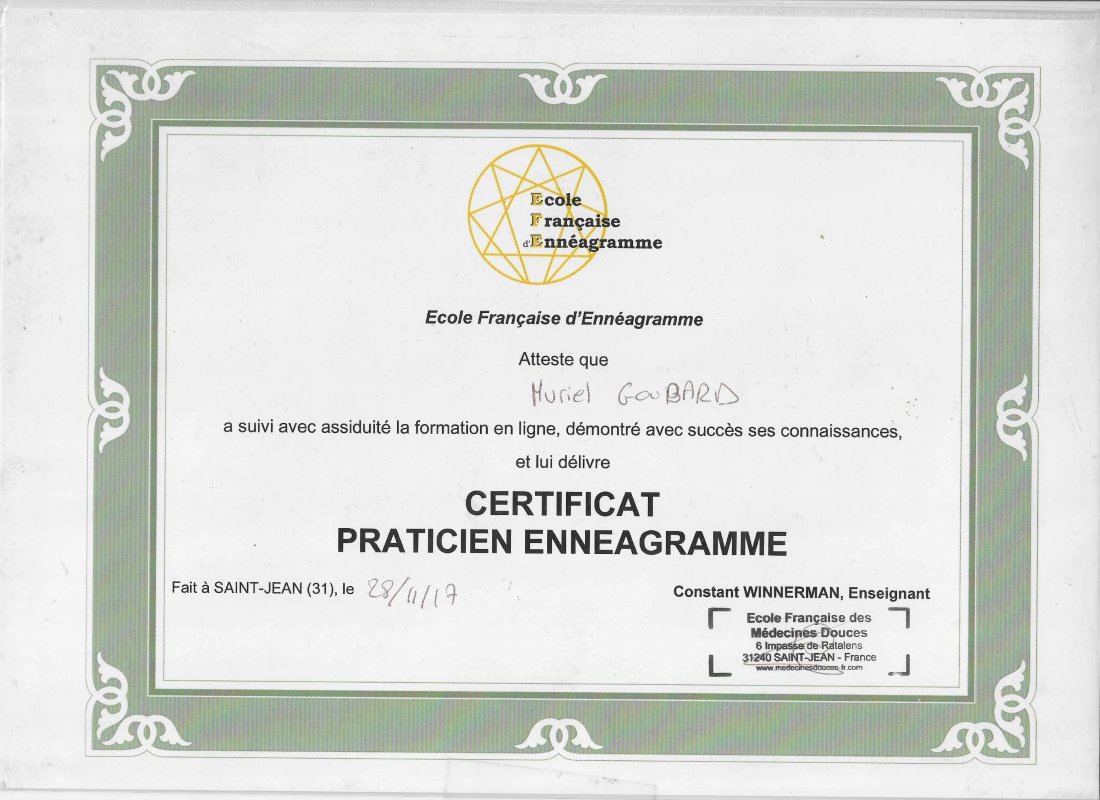
The Enneagram
Why is it so hard to communicate with others? We are not experts in “being human”: it is not something we learn at school. Our emotions sometimes overwhelm us, and our own reactions surprise us.
The Enneagram is a tool for self-knowledge. It is not a reductive method that puts people in boxes: on the contrary, it seeks to get them out.
By discovering our Enneatype, we discover our qualities, our flaws and our deep motivations, as well as how we react in situations of security or insecurity. It is a typology of motivations: it tells us the why.
Everything is movement. So are we…
Transactional analysis
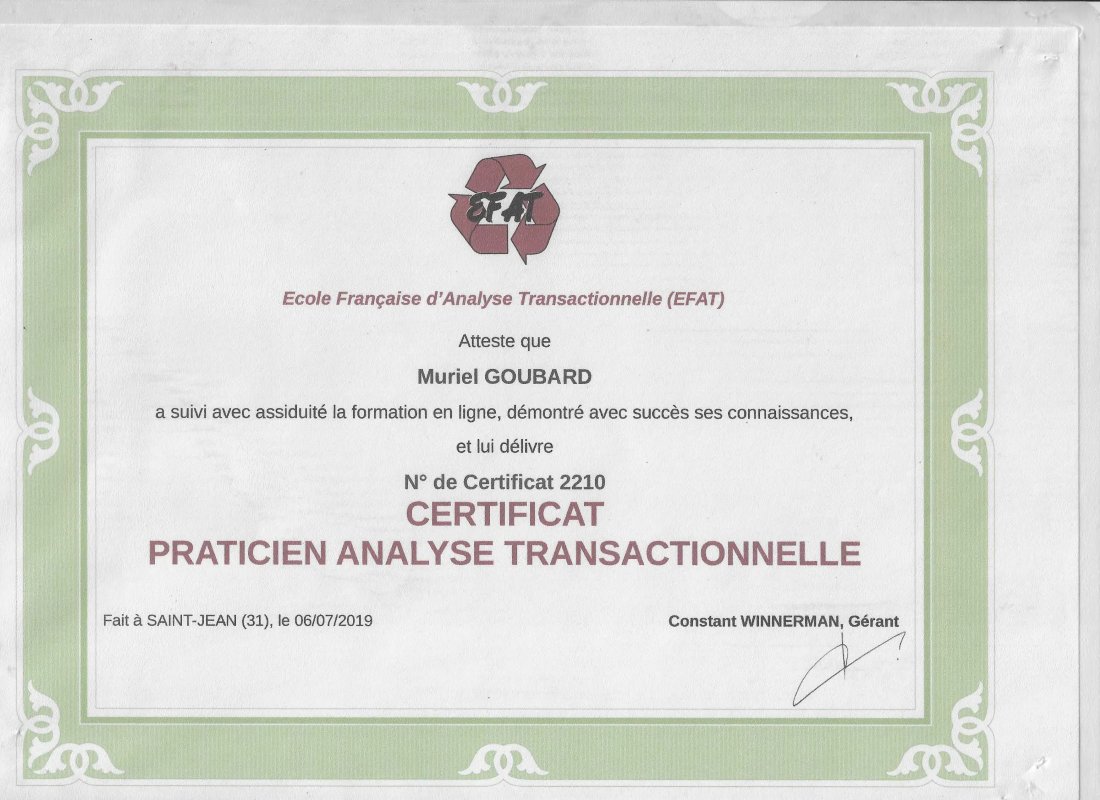
Transactional analysis is a practical study of how personality works, within ourselves and in our relationships with others. Eric Berne developed this theory in the 1950s.
It is for anyone who finds it hard to express themselves, with others or in front of others, and for anyone who longs for a change in life but does not dare to take the leap.
- Learning to manage your emotions
- Understanding how relationships work
- Learning communication techniques and avoiding the pitfalls
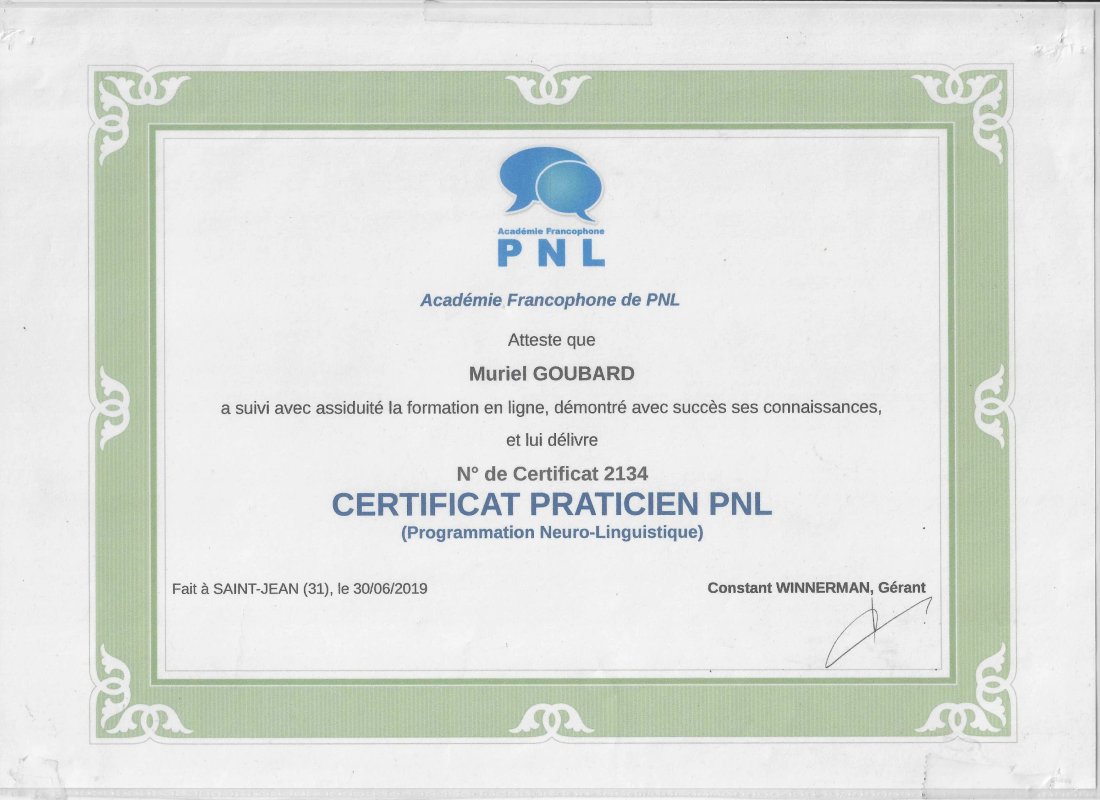
NLP
Neuro-linguistic programming organises techniques around what we have all done naturally since the dawn of time: communicating and thinking.
Created in the 1970s in the United States by Bandler and Grinder, it is for anyone who wishes to improve their relationships with others, in personal and professional life alike. It helps you work on how you communicate with yourself and with others.
CBT
Cognitive behavioural therapy combines cognitive theory and behavioural theory.
In the 1960s, the American Aaron Beck began working on “automatic thoughts”: negative thoughts about oneself, the world or one’s future. This approach helps you progress emotionally and bring about lasting positive change.
Magnetism
Magnetism works with the life force, the energy we help to flow. It is a holistic approach: it takes the whole person into account, physical, mental, emotional, family, social, cultural and spiritual.
I work remotely, by phone or online. How is that possible? When you make a phone call, the person is not beside you, and yet… you can hear them, can’t you? Imagine that energy is the voice!
Already used in ancient Egypt, magnetism is a non-intrusive, non-aggressive practice that complements medicine and does not replace it. Some people are for it, some against. Everything is respectable. But why not make up your own mind?
I follow the magnetiser’s charter: I do not make diagnoses, I never have an ongoing treatment stopped, and if needed, I refer you to a doctor.
These approaches aim at well-being. They do not replace medical advice or treatment: if you are receiving treatment, keep following it and talk to your doctor. If your situation calls for it, I may ask for your doctor’s opinion before we start, or refer you to a doctor.